
Common Workplace Safety Questions Answered by an Industry Professional
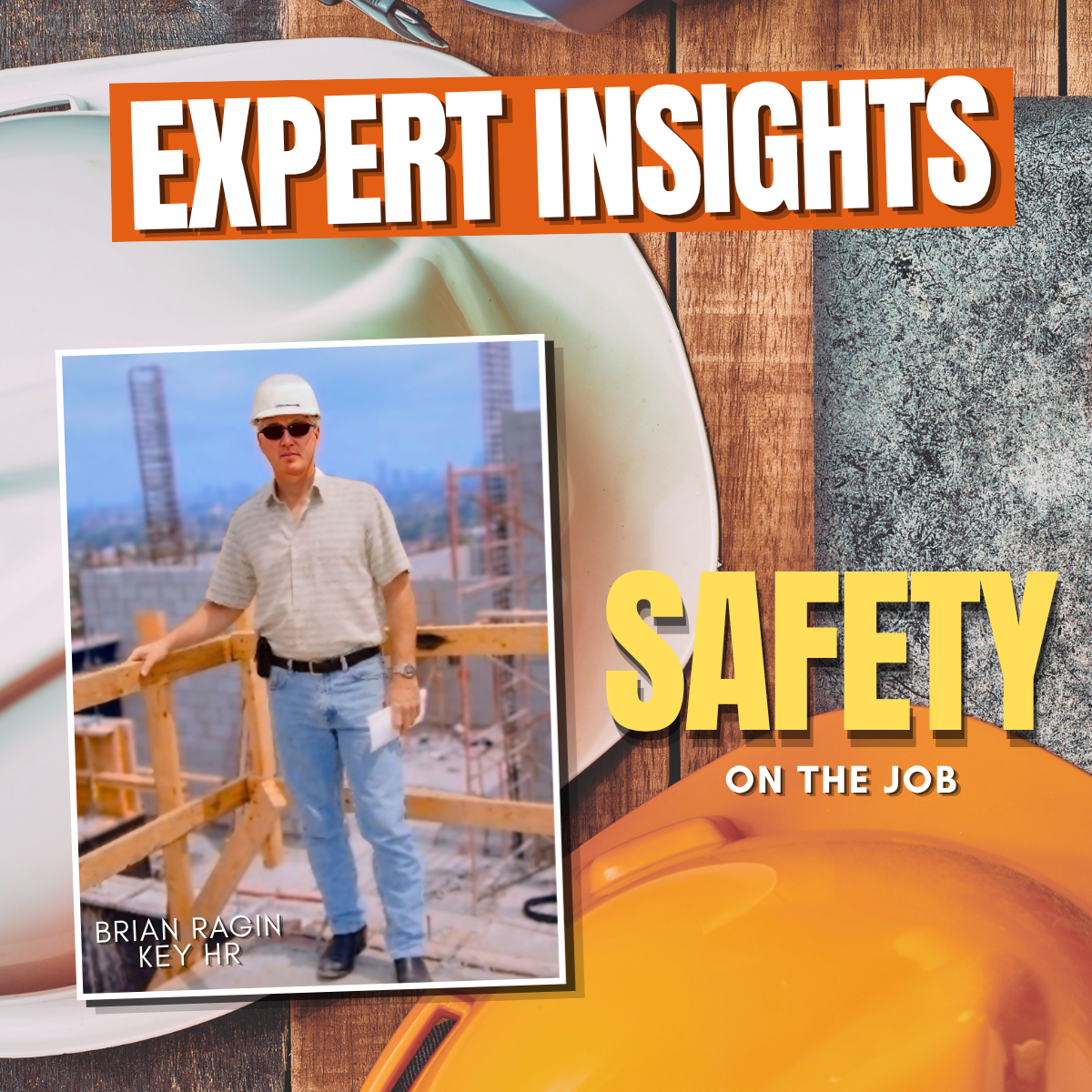


This week, we are excited to share insights from a true expert in workplace safety. JobConnection Services is proud to work with safety specialist, Brian Ragin, through our partnership with KEY HRO. We believe that his valuable insights can greatly benefit any workplace and its employees in maintaining a safe environment.
Brian , safety manager for KEY HRO, has a tremendous wealth of knowledge and over four decades of deep, hands-on experience. A true industry veteran, Brian’s career spans across high-stakes environments, including construction, general industry, heavy equipment operations, and the oil fields. He has a unique, ground-level perspective shaped by over eighteen years working on numerous large private and government construction management and direct hire projects nationwide. He doesn’t just manage safety from a desk; he understands the exact risks crews face because he has stood in their boots.
Over the last 28 years, Brian has funneled this extensive field expertise into the Professional Employer Organization (PEO) space. He specializes in helping PEO clients nationwide navigate complex compliance landscapes, build proactive cultures of awareness, and drastically mitigate workplace risks.
While Brian is highly skilled at protecting a company’s bottom line by lowering workers' compensation claims and managing risk, his core philosophy is deeply personal. For Brian, true success isn't just about passing inspections or checking compliance boxes; it’s about ensuring that every single employees.
What are the most common safety hazards at worksites you have encountered?
The most common safety hazards encountered include:
Machine Hazards – Guards improperly used and/or not replaced after service. Lockout and Tagout procedures not followed. Inadequate training.
Ladder Use – Improper selection, set up and use as well as lack of training with equipment.
Noise Hazards – Employers not accurately identifying sources of noise and conducting noise assessments. Not first attempting to implement engineering controls before considering PPE.
Forklift Operations – Failure to inspect forklifts. Forklifts being operated that should have been removed from service for deficiencies. Operating at unsafe speeds. Allowing forklifts and pedestrians in the same area without safety protocols for reducing risk of contact between persons and machines.
Failure to either use PPE, or the correct PPE for the job at hand
How do you recommend companies develop a safety plan?
Our partners have access to our Risk Management Center’s (RMC) resource for building safety programs and training of employees. Companies can start with a template located in the RMC. We recommend that companies develop an Injury and Illness prevention program by following the program requirement steps below.
Responsibility - Assign staff responsibilities for implementing the programs elements. Designate a champion for coaching others and overseeing overall programs performance.
Accountability – Make safety part of employee performance reviews to include disciplinary actions. List responsibilities of employees, leaders and supervisors and management.
Communication – Communicate from top management down to the organization a mission and set of values.
Hazard Assessment - Perform hazard assessments for identifying and addressing specific hazards in the organization.
Accident/Incident Investigations - Ensure that occupational injuries or illnesses are promptly reported and investigated to determine their cause and measures that can be used to correct the cause.
Training - Provide periodic and applicable health and safety training to company personnel.
Hazard Correction – Abate findings and hazards. Communicating with employees on health and safety matters and encourage them to report apparent work-site hazards.
Recordkeeping – Document trainings, assessments and corrective actions taken to address hazards.
What role does employee training play in maintaining workplace safety, and how often should it be conducted?
Employee training is the cornerstone of any successful safety strategy. They provide employees with a clear understanding of safety protocols and procedures specific to their roles and the workplace. Benefits include:
Reduced Workplace Accidents
Improved Compliance
Positive Safety Culture
Enhanced Productivity
Cost Savings
Training Frequency (Best Practice and OSHA Required)
New Hire Training on company policies, procedures and safety direction prior to new hire persons starting work.
Training for addressing site specific hazards to include but not limited to, chemical hazards, machine operations, machine guards, lockout-tagout procedures, fall protection, tool and equipment use, respiratory, electrical, emergency response, PPE and noise exposure.
Specific OSHA required training such as with but not limited to Powered Industrial Trucks (every three years) and similar equipment, fall protection and prevention, confined spaces, when new hazards are discovered, emergency information.
Retraining when:
a. Changes in the workplace that renders previous training obsolete
b. Changes in types of PPE needed as exposures change
c. Incident and accident root cause findings warrant re-training
d. OSHA required annual training
How can companies build a culture of safety among their employees?
Companies can build a proactive safety culture through an effective onboarding and initial and ongoing training of employees.
Onboarding and New Hires Orientation Training – Onboarding and initial safety training is about preventing accidents before they happen and ensures that new hire persons can perform their tasks safety and efficiently from their first day on the job.
Fostering Continuous Learning and Improvement – A proactive safety culture doesn’t end with day one training. It requires an ongoing commitment to continuous learning and improvement.
Can you share examples of successful safety initiatives you’ve encountered?
A good example of successful safety initiatives is with employers forming a safety committee. An organizations safety committee plays a crucial role in promoting safe practices and reporting unsafe conditions. Safety committee members recognize risks before they may cause an incident, increase communication about safety and work to improve the safety program for everyone. In many cases, after recommending the formation of a safety committee, loss ratios decline, hazard recognition and abatement of hazards discovered increases.
We're really grateful to Brian for taking the time to highlight the importance of a strong safety culture and these proactive measures. By adopting these strategies, companies can create a secure environment, stay compliant with regulations, and achieve operational success. If you're interested in learning more about implementing safety strategies in your workplace or want to know more about collaborating with KEY, feel free to contact Brian at brian@keyhro.com or check out their services on their website. https://keyhro.com.


